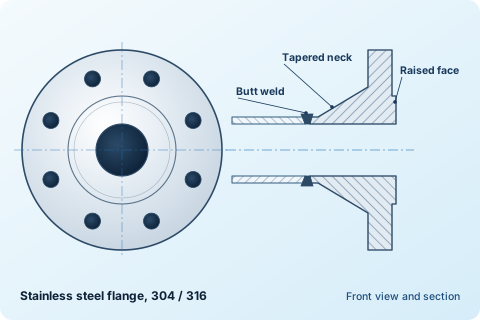
304 or 316: choosing the grade
| Grade | What it adds | Typical service |
|---|---|---|
| 304 (F304) | 18% chromium, 8% nickel: good general corrosion resistance | Water, air, food contact, general process |
| 304L (F304L) | Low carbon, so welded joints resist corrosion at the weld | Welded process lines, dairy, beverage |
| 316 (F316) | About 2% molybdenum for better resistance to chlorides | Chemicals, coastal plants, brine, cooling water |
| 316L (F316L) | Low-carbon 316 for welded chloride service | Pharma, RO and desalination, chemical dosing |
| 321 (F321) | Titanium-stabilised for service at elevated temperature | Hot gas, exhaust and heat-recovery lines |
Weld an L-grade flange to an L-grade pipe. Many forged flanges are dual-certified (for example 316/316L), which covers both. Read our SS 304 vs SS 316 guide for more on grade choice.
Match the flange to the pipe
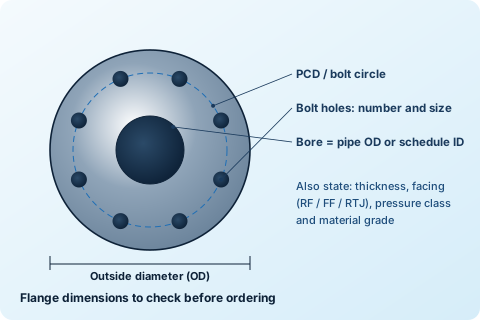
- Weld neck: the bore must match the pipe's inside diameter, so state the schedule (Sch 10S, 40S or 80S).
- Slip-on and socket weld: the bore or socket is sized to the pipe's outside diameter. Give the pipe OD, not only the NB size.
- Grade: keep flange and pipe in the same grade family so the weld behaves the same way as the parent metal.
Pressure ratings in ASME B16.5 depend on the material group, and L grades are rated lower than standard grades in the same class. Check the rating for your grade and design temperature, or see our pressure class guide.
Cutting cost on stainless lines with lap joints
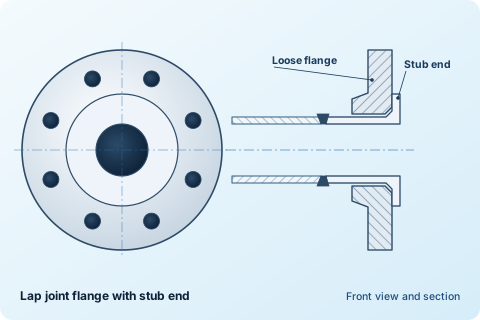
On large SS lines, a lap joint flange with an SS stub end lets the fluid touch only the stub end. The loose backing flange can then be carbon steel, which costs much less than a full SS flange and rotates to line up bolt holes. It also makes lines easier to dismantle for cleaning.
Handling and fabrication
Store and fabricate stainless flanges away from carbon steel. Carbon steel grinding dust and tools leave iron on the surface, which later rusts and stains. After welding, pickling and passivation restore the protective surface. Use gaskets and bolting suited to the fluid and temperature.
Where SS flanges are used
- Pharma and biotech utilities: purified water, clean steam and CIP lines
- Food, dairy, beverage and distillery plants
- Chemical and fertilizer process lines
- Water treatment, RO and desalination
- Coastal and offshore-adjacent plants where MS corrodes quickly
- Paper, sugar and textile process water
Pipes and fittings to go with SS flanges
| Pipe or fitting | Use it with these flanges when… |
|---|---|
| SS seamless pipes (304 / 316L) | you need schedule pipe for pressure or process lines |
| SS round pipes | the line uses welded SS pipe or tube |
| SS stub ends with lap joint flanges | you want a cheaper backing flange or easy dismantling |
| SS elbows, tees and reducers | you need fittings in the same grade |
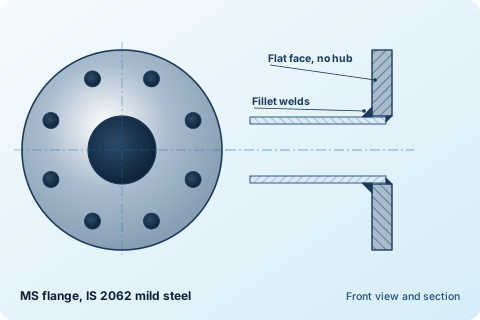 MS Flanges
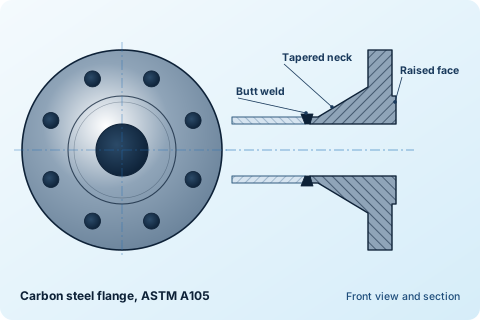 Carbon Steel Flanges
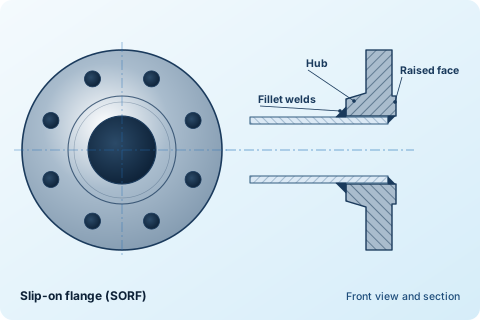 Slip-On Flanges (SORF)
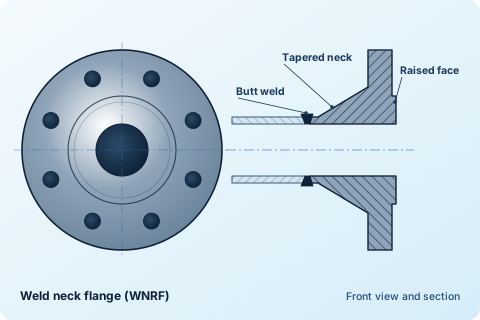 Weld Neck Flanges (WNRF)
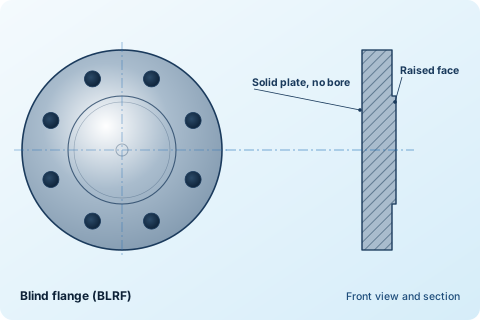 Blind Flanges
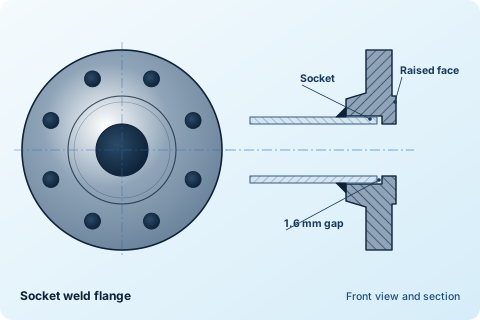 Socket Weld Flanges
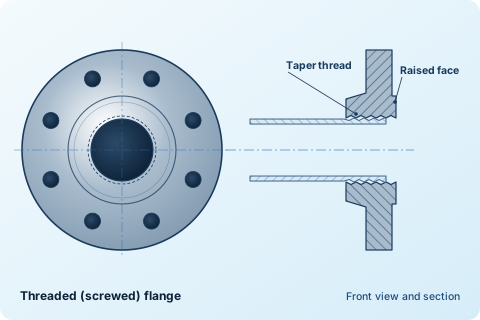 Threaded Flanges
 Lap Joint Flanges
 Plate Flanges
 Flange Size & Class Chart