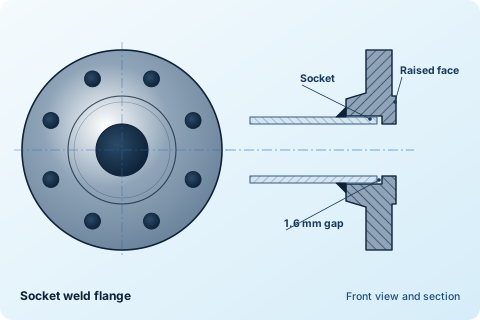
Leave the expansion gap
Before welding, the pipe is pushed into the socket until it bottoms out and is then pulled back, leaving a gap of about 1.6 mm (1/16") between the pipe end and the socket shoulder. The gap stops the weld from cracking when the joint heats up and the pipe expands. Piping codes such as ASME B31.1 and B31.3 describe this practice; follow your welding procedure for the exact figure.
Socket weld, threaded or slip-on for small bore?
| Socket weld | Threaded | Slip-on | |
|---|---|---|---|
| Joint | One external fillet weld | Screwed, no welding | Two fillet welds |
| Pressure | High | Low to moderate | Moderate |
| Leak risk | Low | Higher under vibration or heat | Low |
| Bore | Smooth, matched to schedule | Smooth | Step at the pipe end |
| Best for | Hydraulic, steam drains, process small-bore | GI water, air, no-hot-work areas | Utility lines |
See also threaded flanges and slip-on flanges.
Where to avoid socket welds
The gap at the bottom of the socket leaves a small crevice. In corrosive service, liquids trapped in that crevice can cause crevice corrosion, and some specifications restrict socket welds in severe cyclic service. In those cases, a small-bore weld neck flange is the usual alternative.
Where socket weld flanges are used
- Hydraulic and lube oil lines
- Steam trap, drain and vent connections
- Instrument and sampling connections
- Chemical dosing and injection lines
- Compressed air and gas manifolds on skids
Pipes and fittings to go with socket weld flanges
| Pipe or fitting | Use it with these flanges when… |
|---|---|
| Hydraulic pipes | the flanges are on hydraulic or lube oil lines |
| MS seamless pipes | you need Sch 80 or Sch 160 small-bore pipe |
| SS seamless pipes | the line is stainless |
| Socket weld couplings and fittings | you need ASME B16.11 fittings for the same line |
Small-bore package to quote?Send sizes, class, schedule and grade for flanges and SW fittings together.
 MS Flanges
 Stainless Steel Flanges
 Carbon Steel Flanges
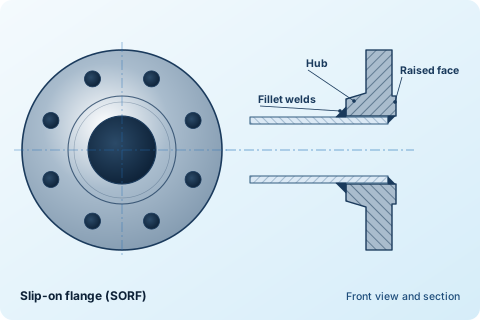 Slip-On Flanges (SORF)
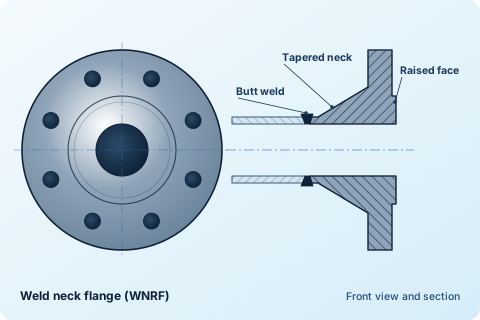 Weld Neck Flanges (WNRF)
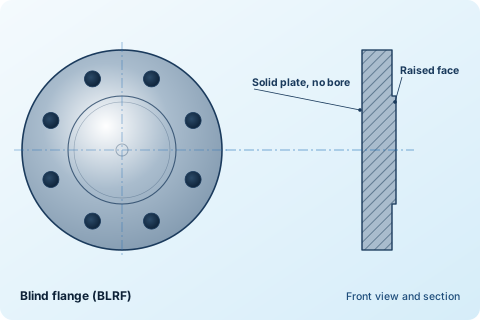 Blind Flanges
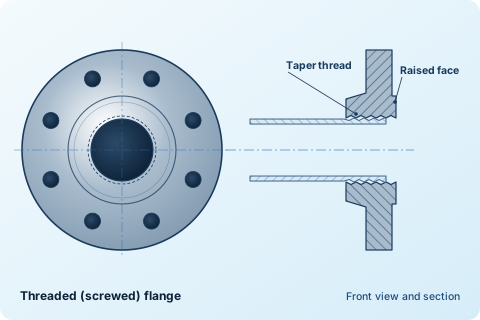 Threaded Flanges
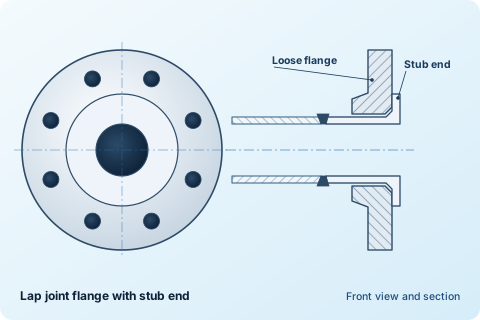 Lap Joint Flanges
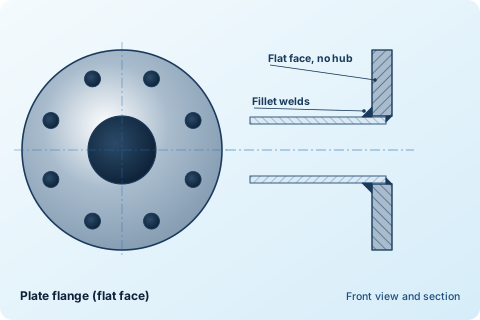 Plate Flanges
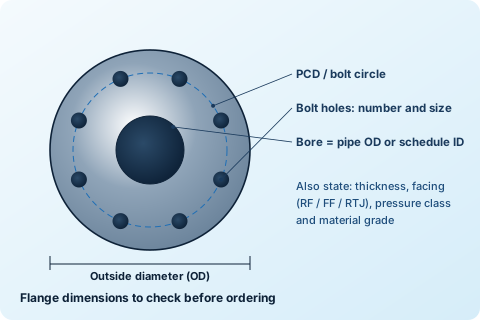 Flange Size & Class Chart