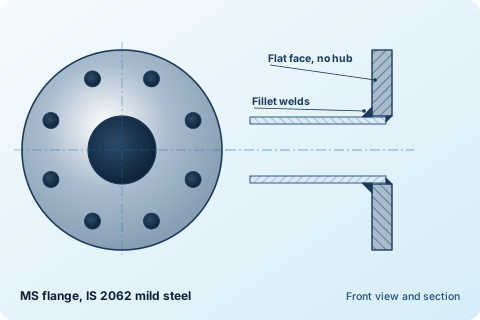
MS flange types we supply
| Type | What it is | Typical use |
|---|---|---|
| Plate flange | Flat disc, no hub, welded inside and outside | Water, air, drainage, ducting, general fabrication |
| Slip-on flange | Pipe slides through; plate or hubbed | Utility and process lines at low to moderate pressure |
| Blind flange | Solid disc with bolt holes, no bore | Closing line ends, nozzles and future branches |
| Weld neck flange | Tapered hub butt-welded to the pipe | Higher pressure or vibrating lines (forged CS is preferred) |
| Threaded flange | Screwed onto a threaded pipe end | GI water and air lines where welding is avoided |
Table E, IS 6392 or ASA 150: which drilling do you need?
The same nominal size can be drilled in several ways. A 4" flange to Table E, one to IS 6392 and one to ASME B16.5 Class 150 have different outside diameters, bolt circles (PCD) or bolt counts, so they usually will not bolt together. Before ordering, check what the mating flange, pump or fitting uses.
- Table D, E, F, H: drilling tables from the old British standard BS 10. It is withdrawn, but Table E is still the most common MS flange in Indian trade, especially on older plant and BS-pattern equipment. D is the lightest, H the heaviest.
- IS 6392: the Indian Standard for steel pipe flanges, rated by PN (nominal pressure). Often specified on Indian government and infrastructure work.
- ASA / ASME B16.5 Class 150 or 300: the American pattern used on most imported pumps and process equipment. See the flange size chart for Class 150 and 300 OD, PCD and bolt sizes.
Not sure? Measure the flange outside diameter and the distance between centres of two opposite bolt holes (the PCD), count the holes, and send us those three numbers with a photo. We will match the drilling.
MS flange price: what decides the rate
An MS flange is priced mostly on the steel it contains, plus cutting, drilling and finishing. The rate per piece rises with:
- Size and drilling table: a Table H flange is thicker and heavier than a Table E flange of the same size.
- Type: a blind flange of the same size costs more than a slip-on because it is solid.
- Finish: hot-dip galvanizing is charged extra.
- Quantity and delivery location: freight and GST are quoted separately.
Our flanges and fittings page lists indicative per-piece rates for Table E and Class 150 slip-on and blind flanges from ½" to 24". For a firm price, send the size, table, type and quantity.
Where MS flanges are used
- Water supply, pumping stations and cooling water lines
- Fire hydrant and sprinkler ring mains
- Compressed air and low-pressure gas utilities
- HVAC chilled water, ducting, blower and exhaust connections
- Tank and vessel nozzles in general fabrication
- Agricultural pump sets and irrigation headers
When an MS flange is the wrong choice
Plate MS flanges are made for low to moderate pressure at ordinary temperatures. For steam, hydrocarbons, high pressure, thermal cycling or vibrating lines, piping specifications normally call for forged carbon steel flanges in ASTM A105, usually as weld neck flanges. For corrosive liquids, food or pharma service, use stainless steel flanges. Your piping specification or consultant has the final say.
Pipes and fittings to go with MS flanges
| Pipe or fitting | Use it with these flanges when… |
|---|---|
| MS round pipes and tubes | you need black MS pipe for water, air or structural lines |
| ERW pipes (IS 1239 / IS 3589) | the line uses light, medium or heavy class ERW pipe |
| GI pipes | the line is galvanized; pair with galvanized or threaded flanges |
| MS seamless pipes | pressure is higher and the flange is forged |
| Elbows, tees and reducers | you need the full set of fittings for the same line |
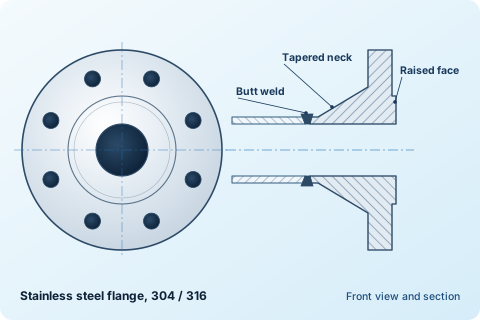 Stainless Steel Flanges
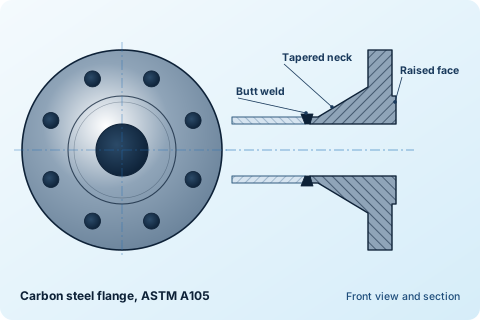 Carbon Steel Flanges
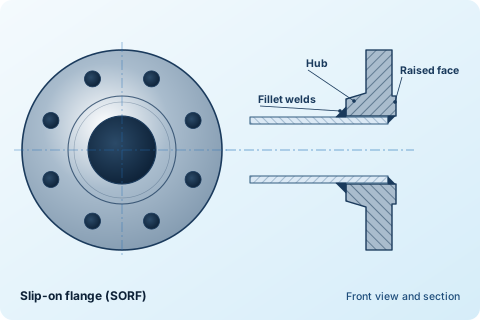 Slip-On Flanges (SORF)
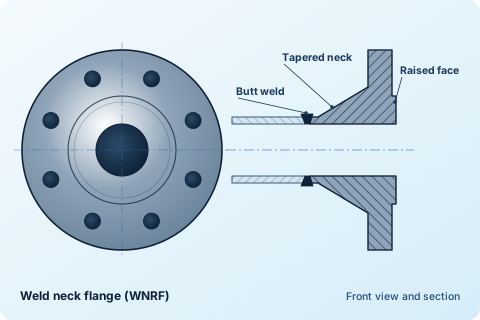 Weld Neck Flanges (WNRF)
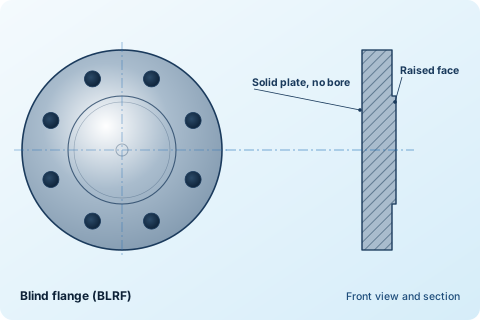 Blind Flanges
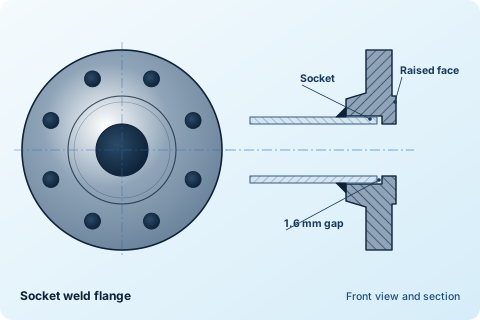 Socket Weld Flanges
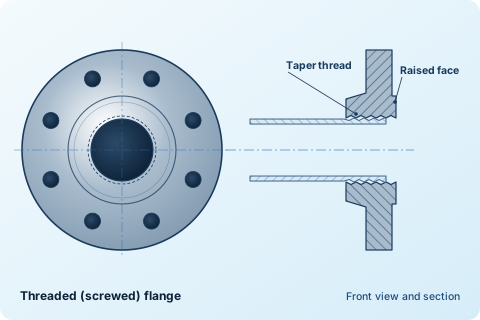 Threaded Flanges
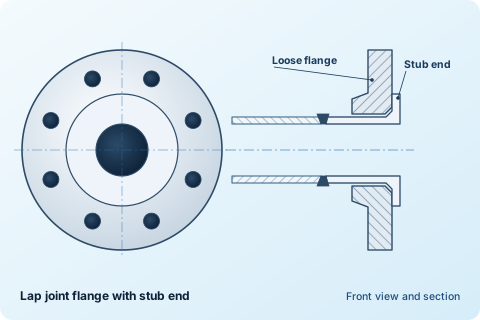 Lap Joint Flanges
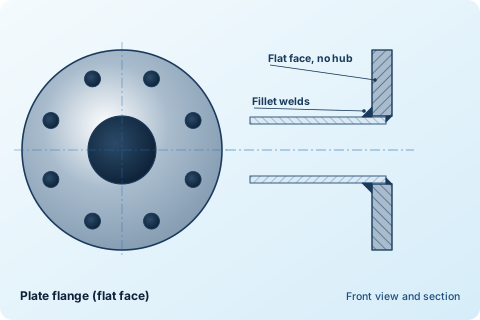 Plate Flanges
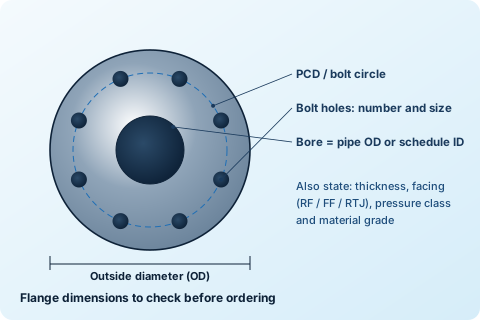 Flange Size & Class Chart