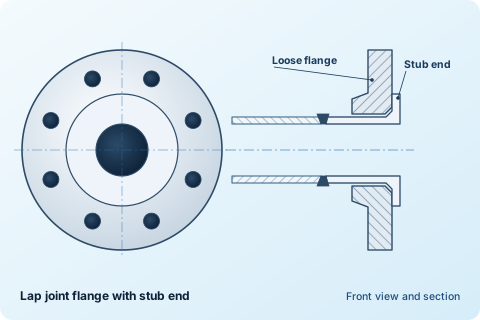
When to choose a lap joint
- Expensive pipe material: only the stub end needs to be stainless or alloy, so the flange cost drops sharply on large sizes.
- Frequent dismantling: food, dairy, pharma and chemical lines that are opened for cleaning or inspection.
- Alignment: connecting to pumps or equipment where bolt holes are hard to line up.
- Moderate pressure: lap joints have lower fatigue resistance than weld neck flanges, so they suit Class 150 and 300 service without heavy cycling.
Long or short stub ends?
Long-pattern stub ends (ASME B16.9) have a longer barrel, giving room for the butt weld away from the flange. Short-pattern stub ends (MSS SP-43) are more compact and common on thin-wall stainless lines. The radius at the stub end's lip must suit the backing flange's bore corner, so tell us which flange you will use, or let us supply both as a set.
Lap joint vs slip-on
| Lap joint + stub end | Slip-on | |
|---|---|---|
| Parts | Loose flange plus stub end | Single flange |
| Flange touches fluid | No | Yes |
| Bolt-hole alignment | Flange rotates freely | Fixed once welded |
| Cost on SS lines | Lower in larger sizes (CS backing flange) | Full SS flange needed |
| Fatigue resistance | Lower | Moderate |
Compare with slip-on flanges and weld neck flanges.
Where lap joint flanges are used
- Stainless process lines in food, dairy and beverage plants
- Pharma utilities and CIP lines
- Water treatment, RO and chemical dosing
- Lines connected to pumps, filters and skids that are removed often
Pipes and fittings to go with lap joint flanges
| Pipe or fitting | Use it with these flanges when… |
|---|---|
| SS seamless pipes (Sch 10S / 40S) | the stub ends are welded to stainless schedule pipe |
| SS round pipes | the line uses welded stainless pipe |
| Stainless steel flanges | you prefer SS backing flanges |
| SS elbows, tees and reducers | you need butt-weld fittings for the same line |
Pricing a stainless line?Send sizes and schedule. We will compare full SS flanges with lap joint sets.
 MS Flanges
 Stainless Steel Flanges
 Carbon Steel Flanges
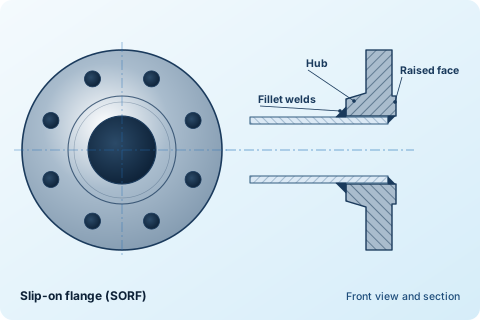 Slip-On Flanges (SORF)
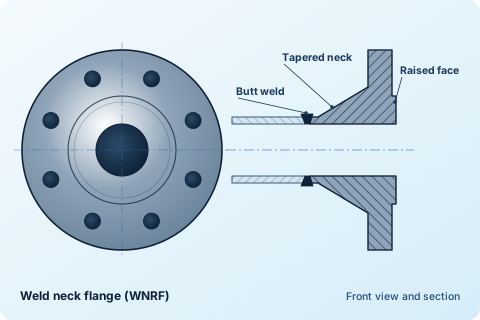 Weld Neck Flanges (WNRF)
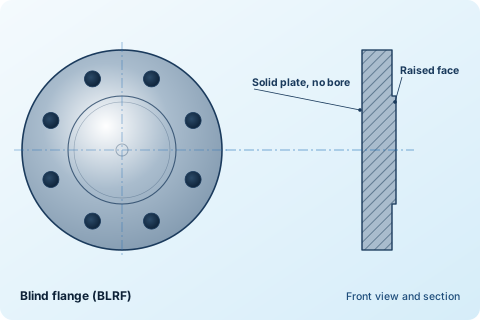 Blind Flanges
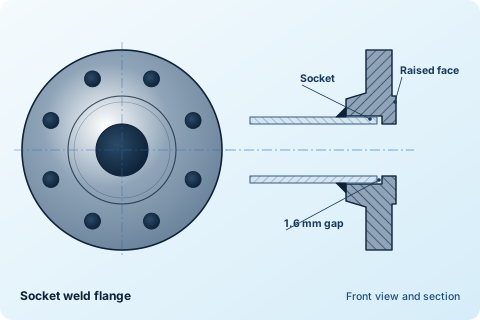 Socket Weld Flanges
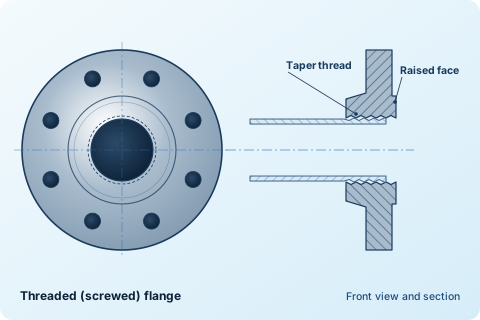 Threaded Flanges
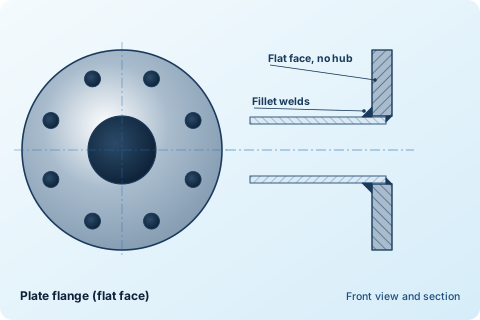 Plate Flanges
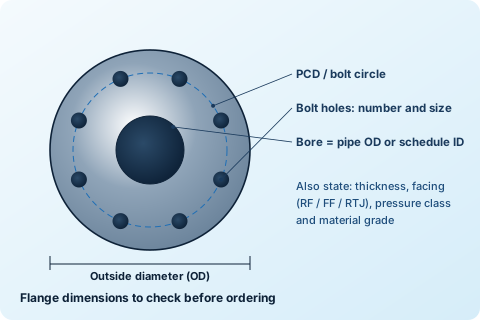 Flange Size & Class Chart