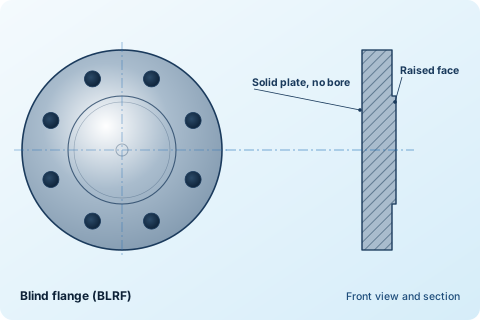
Blind flange, end cap or spectacle blind?
| Item | How it closes the line | When to use it |
|---|---|---|
| Blind flange | Bolted to a mating flange; removable | Line ends and nozzles you may open again |
| End cap | Butt-welded to the pipe; permanent | Ends that will never be opened |
| Spectacle blind or spacer (ASME B16.48) | Clamped between two flanges | Positive isolation of a line for maintenance; ask us if you need one |
Where blind flanges are used
- Closing headers and manifolds left open for future branches
- Spare nozzles on tanks, vessels and heat exchangers
- Cleaning, pigging and inspection access points
- Temporary end closures during hydrostatic testing
- Fire water and utility mains with planned extensions
Ordering a blind flange that fits
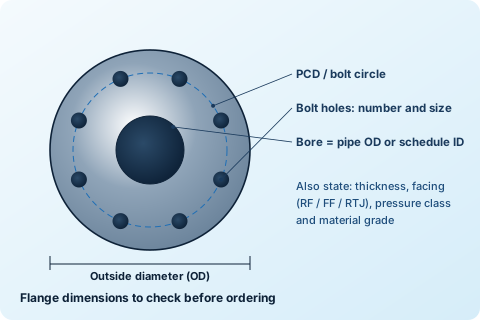
A blind flange must match the mating flange exactly: same standard, size, class or table, bolt circle and number of holes. Match the facing as well: a raised-face blind on a raised-face flange, and a flat-face blind against flat-faced cast iron or FRP equipment. If you need a vent or gauge connection, ask for a tapped blind and give the thread size and type.
MS blind flange price
Blind flanges use more steel than slip-on flanges of the same size, so they cost more per piece. Our flanges and fittings page lists indicative per-piece rates for Table E and Class 150 MS blind flanges. For forged A105 or stainless blinds, send size, class and quantity for a quotation.
Pipes and fittings to go with blind flanges
| Pipe or fitting | Use it with these flanges when… |
|---|---|
| Slip-on flanges | you need the mating flange on the pipe end |
| Weld neck flanges | the line is high pressure or cyclic |
| ERW pipes | you are building water or utility headers |
| Carbon steel pipes | the header is A106 or A53 pipe |
| Tees, reducers and end caps | you need branch and closure fittings |
Closing off several nozzles?Send sizes, class or table and facing. We will quote the blinds and their mating flanges together.
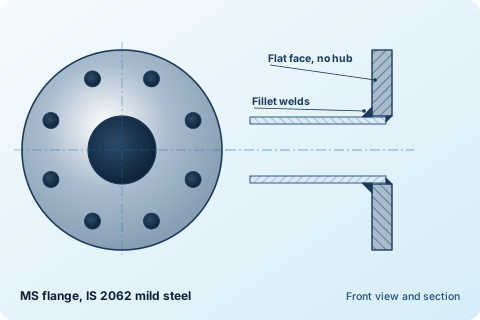 MS Flanges
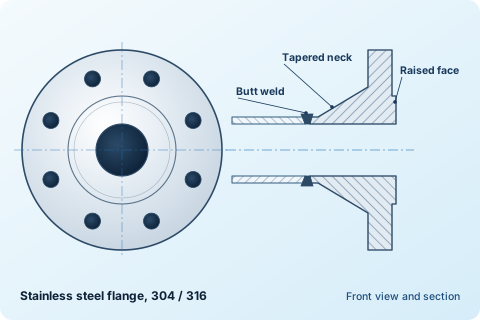 Stainless Steel Flanges
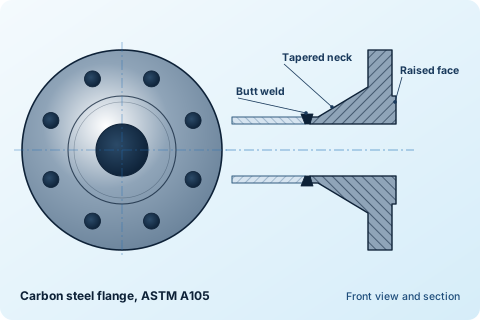 Carbon Steel Flanges
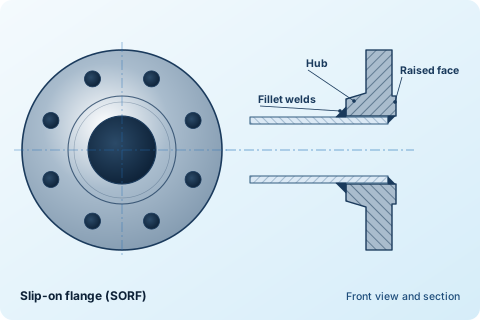 Slip-On Flanges (SORF)
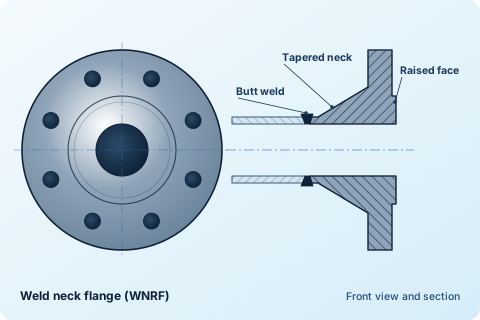 Weld Neck Flanges (WNRF)
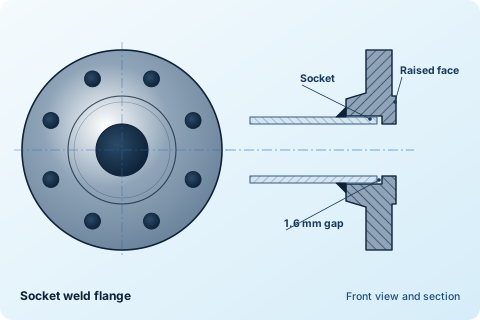 Socket Weld Flanges
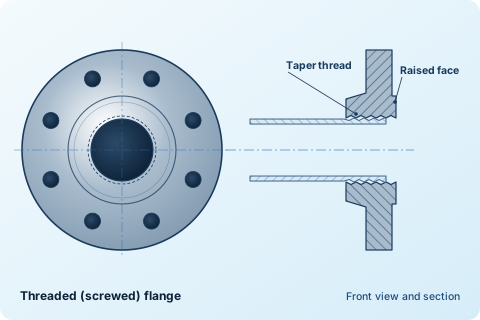 Threaded Flanges
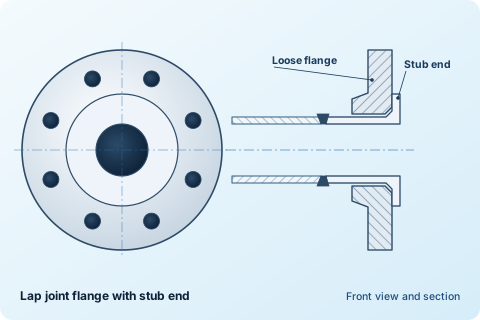 Lap Joint Flanges
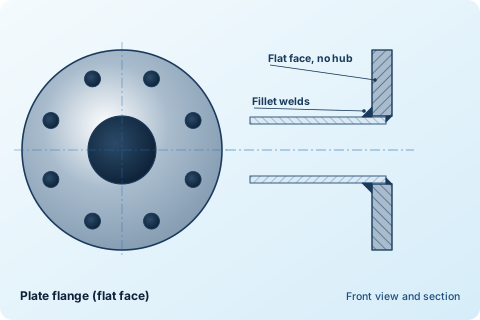 Plate Flanges
 Flange Size & Class Chart